
Controlled documents and SOPs
Keep approved procedures, work instructions and supporting documents under defined review, approval and revision control.
Explore platform architecture, governance, security and the flexible adoption model.
Explore the Product →Six complementary capability families, connected by shared governance.
Explore All Solutions →Learn about K2C and connect with our team to discuss your quality priorities.
Discover K2C →Control essential quality processes and give teams a clearer view of documents, training, change, issues and CAPA while maintaining appropriate oversight of the suppliers and partners involved.
Begin with the core controls that support consistent execution, traceable decisions and continuous improvement.

Keep approved procedures, work instructions and supporting documents under defined review, approval and revision control.
Connect role-based learning, acknowledgements and completion evidence to the procedures people are expected to follow.
Evaluate proposed changes, assign responsibilities, record decisions and retain the evidence needed for controlled implementation.
Document events, assess their significance, assign corrective or preventive actions and follow their completion and effectiveness as applicable.
Set quality objectives, define activities and keep ownership and progress visible across related work.
Bring supplier assessments, audits, findings and related corrective actions into the wider governance picture.
Supplier quality begins before onboarding and continues throughout the relationship. The following activities can be governed alongside internal QMS processes.
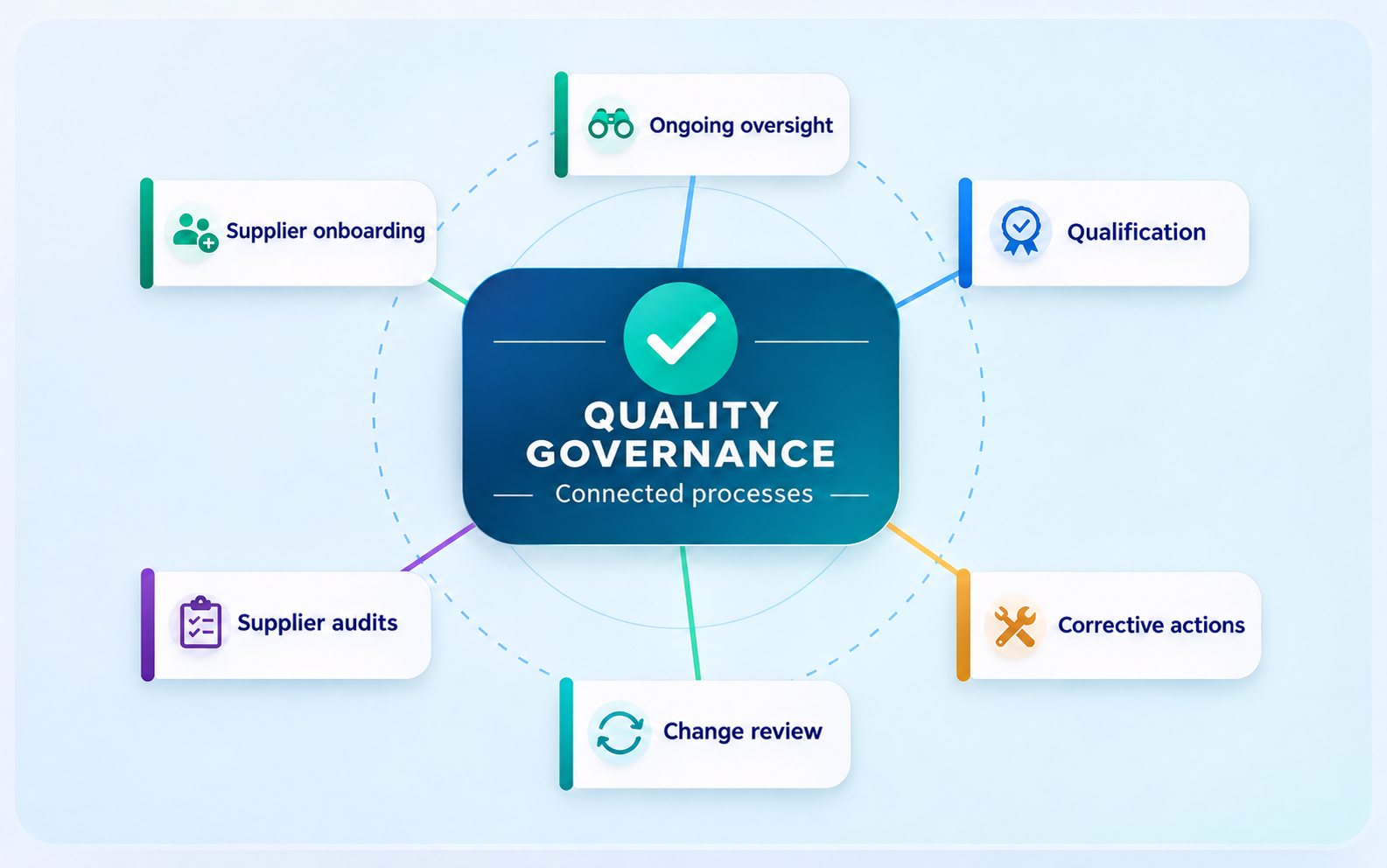
Establish a consistent supplier record, define responsibilities and collect the information needed before beginning regulated work.
Assess the importance of supplied materials or services and document qualification decisions according to the organisation’s requirements.
Plan risk-informed onsite or remote assessments, record audit criteria and coordinate the evidence required from each party.
Document observations, agree on action owners and follow responses through review, closure and any necessary effectiveness checks.
Assess notified changes to materials, services or processes for their impact on approved arrangements and regulated activities.
Review relevant trends, qualification status, open issues and periodic reassessment needs to inform decisions about the supplier relationship.
A practical lifecycle for organising supplier information, assessing risks, addressing findings and reviewing performance.
Define the controlled processes, supplier categories, responsibilities and risk criteria.
Review supporting information, assess risk and document approval or follow-up requirements.
Coordinate audits, requests for evidence, changes and actions with appropriate internal and external owners.
Link findings and quality events to structured investigation and CAPA where required.
Track open commitments, recurring issues, review dates and supplier quality trends.
Use outcomes and lessons learned to refine controls, reassessment plans and quality processes.
Supplier oversight adds value when supporting documents, audits, changes, findings and actions remain connected.
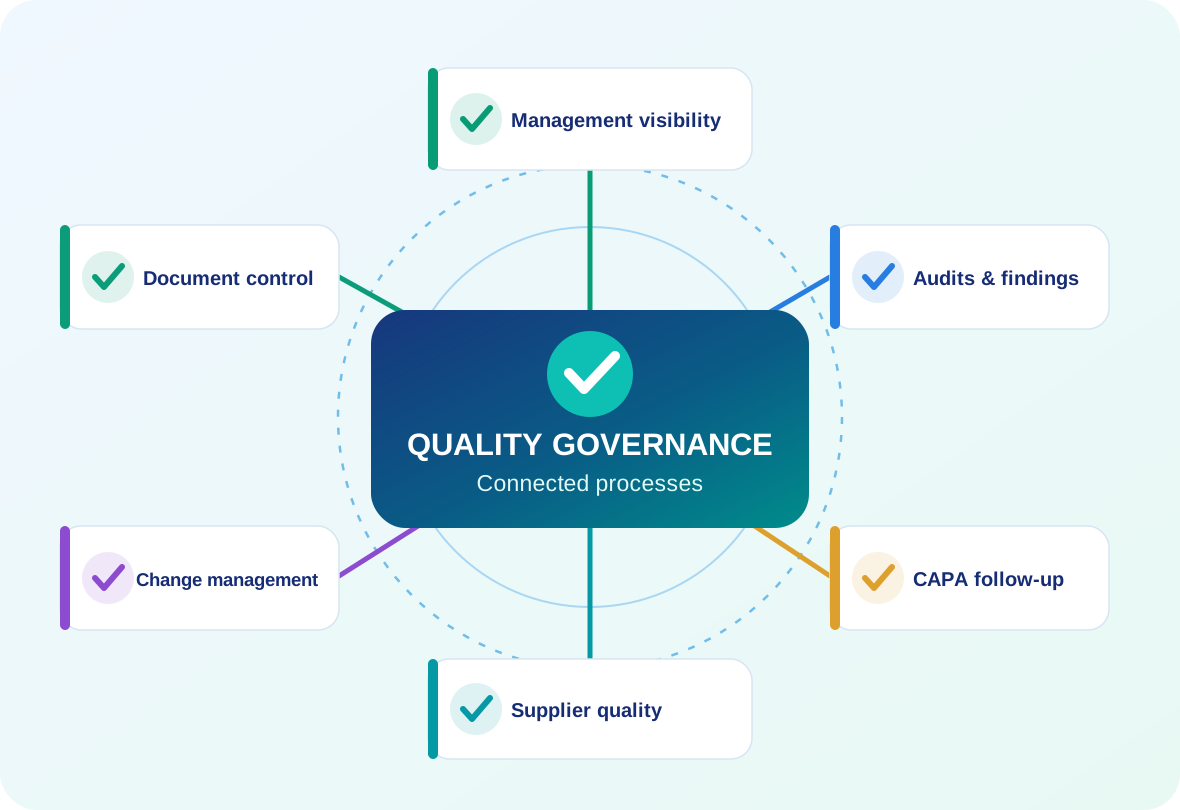
Bring quality decisions and supporting evidence into a more coherent process history.
Help teams see who owns qualifications, audits, action responses and approvals.
Use defined processes and records instead of relying only on disconnected messages and spreadsheets.
Prioritise supplier reviews and follow-up according to business need and quality risk.
Connect quality events, CAPA, changes and supplier oversight for more informed reviews.
Use the appropriate solution family for each business process while keeping the broader governance model in view.
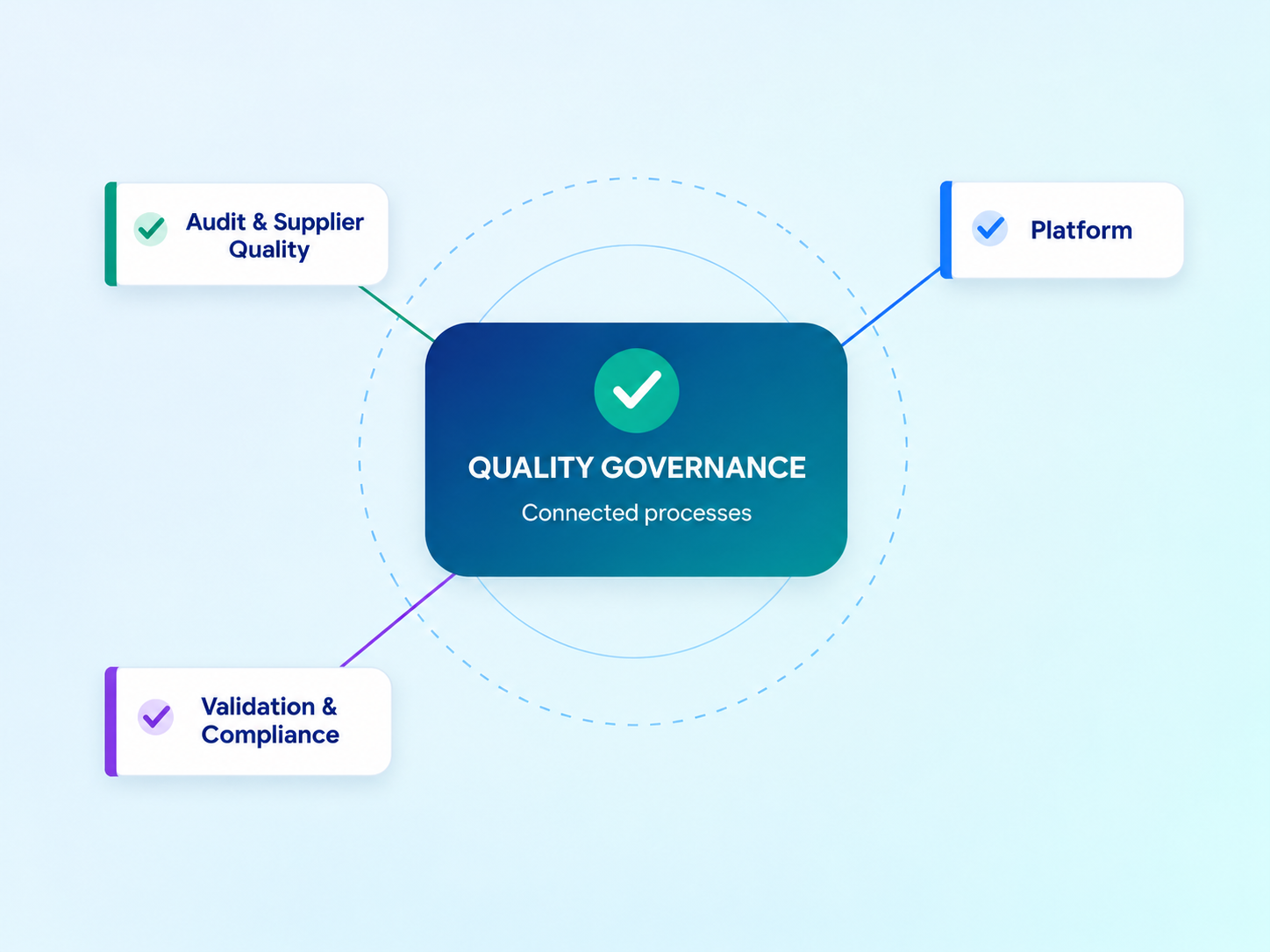
Explore supplier qualification, audit execution, findings and audit follow-up in more detail.
See how modular capabilities, governed records and oversight fit together.
Align configured processes and controls with intended use, risk and qualification activities.
Discuss the processes that need greater control today and how to build a practical, connected roadmap.