
Evidence-based oversight
Establish clear audit criteria and preserve the records supporting conclusions.
Explore platform architecture, governance, security and the flexible adoption model.
Explore the Product →Six complementary capability families, connected by shared governance.
Explore All Solutions →Learn about K2C and connect with our team to discuss your quality priorities.
Discover K2C →Plan, document and follow up on audits while keeping supplier oversight, findings and quality actions connected.
Audits help evaluate process effectiveness, supplier performance and adherence to applicable quality requirements. Audit scope and evidence should reflect the organisation’s operations and relevant GxP obligations.

Establish clear audit criteria and preserve the records supporting conclusions.
Define who plans, performs, reviews and follows up on audits, taking auditor independence into account.
Use findings and trends to inform corrective actions and future audit planning.
Different audit programmes call for different scopes and methods, while benefiting from consistent governance and records.

Assess suppliers and partners through documented qualification, planned audits, findings and follow-up.
Review quality-system processes, responsibilities and evidence to identify gaps and improvement opportunities.
Evaluate how defined processes are followed and whether controls are operating as intended.
Coordinate and document audits conducted by customers, authorities or external parties, including observations and responses.
Coordinate evidence for clinical, laboratory or manufacturing audits where these apply to the organisation.
Review risk-based controls and the integrity, availability and traceability of regulated records.
Common difficulties arise when the audit programme relies on manual hand-offs, inconsistent records or disconnected tracking.
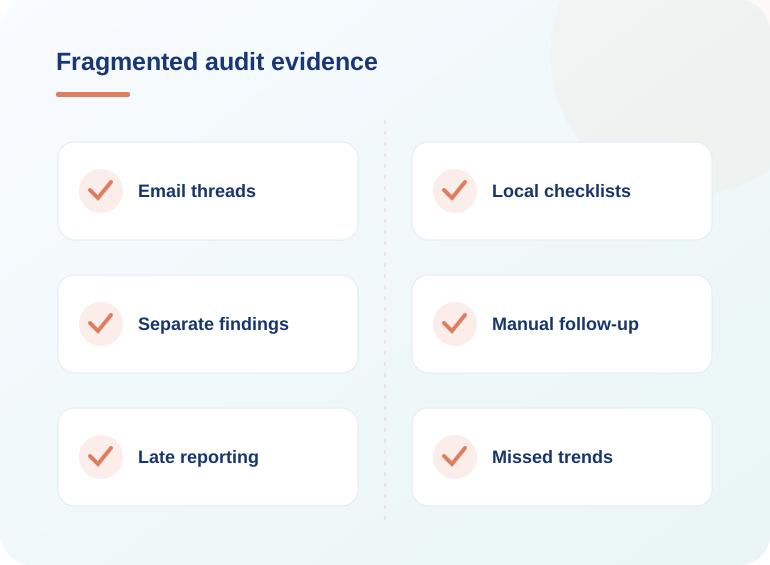
Planning, arranging auditors, collecting evidence and sending reminders can consume valuable time.
Audit teams and process owners may work through separate email threads without a consistent picture of actions and due dates.
Reports, supporting documents and previous audit results can become difficult to locate and reuse.
When audit observations and corrective actions are managed separately, follow-up can lose context and accountability.
Different checklists, templates and reporting approaches can make results difficult to compare.
Without consolidated audit information, trends, overdue actions and recurring issues are harder to identify.
A structured approach follows the audit from planning to closure and learning. The stages below illustrate an audit-management operating model, not a claim that every function is automated in K2C.
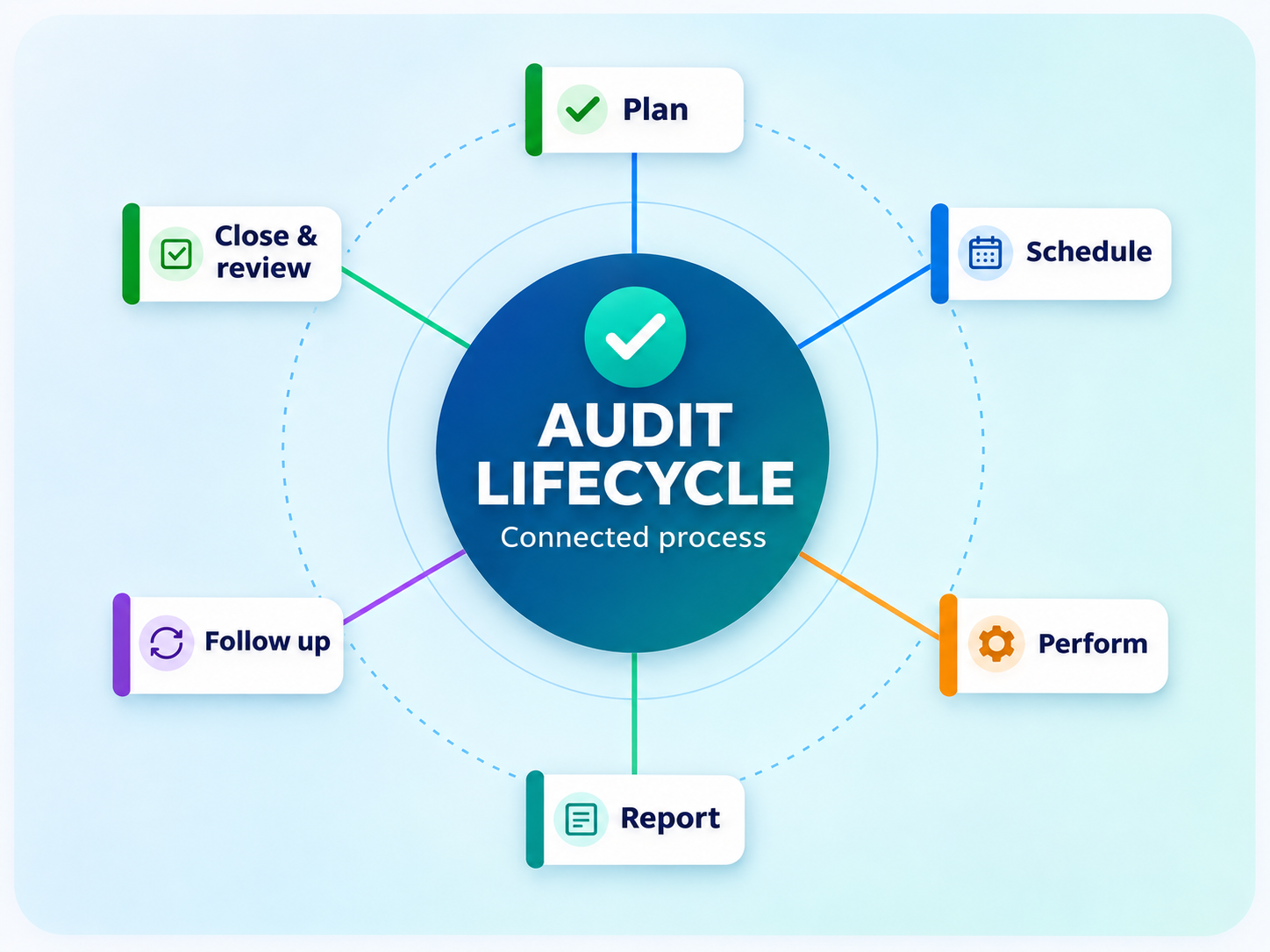
Define audit scope, criteria, programme, responsibilities and risk priorities.
Coordinate timing, auditor assignments, notifications and the people being audited.
Record objective evidence, observations and findings in a consistent structure.
Document conclusions, review results and communicate findings to relevant owners.
Assign responses and corrective or preventive actions; connect findings with CAPA where applicable.
Confirm required follow-up, maintain traceable records and assess patterns for future audit planning.
K2C connects audit and supplier-quality processes with the broader quality context. Available workflows and integrations depend on the chosen modules and implementation.
Explore the Platform →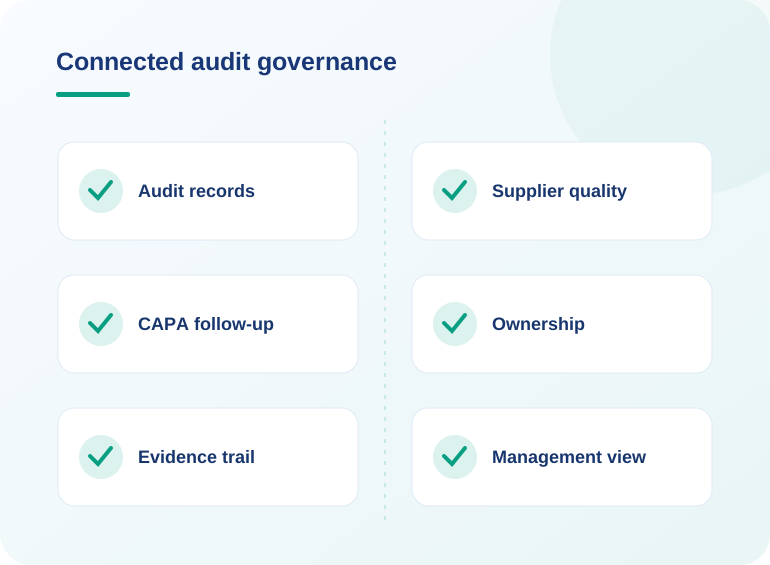
Maintain a clear relationship between the audit, observations, evidence and follow-up.
Bring qualification and supplier-related audits into the relevant quality-process scope.
Give responsible teams the context needed to assess findings and manage actions where applicable.
Support clear ownership, review and the traceability required by the agreed process.
A well-structured audit programme can help organisations reduce avoidable effort and strengthen oversight.
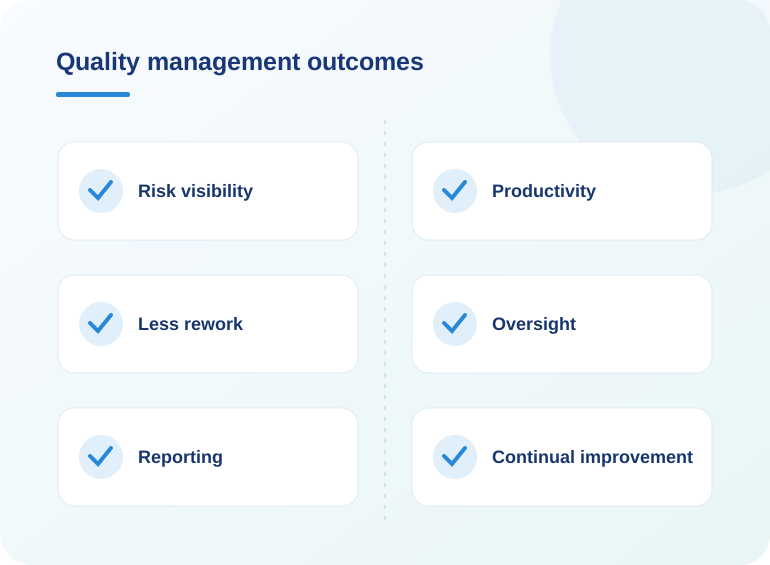
Use audit results and recurring findings to focus attention on processes requiring additional control.
Reduce duplicate data entry and repetitive coordination through structured information and workflows.
Consistent audit records and clearer follow-up can limit lost evidence and unnecessary repetition.
Connect findings, responsibilities and related actions to support continual process improvement.
Make open audits, findings, ownership and overdue actions easier to review across the organisation.
Continue from audit management into related quality processes.
Discuss your audit programme, supplier oversight and the first processes to connect.