
Consistent record capture
Use defined information fields and repeatable structures to make operational and quality entries easier to interpret.
Explore platform architecture, governance, security and the flexible adoption model.
Explore the Product →Six complementary capability families, connected by shared governance.
Explore All Solutions →Learn about K2C and connect with our team to discuss your quality priorities.
Discover K2C →Build confidence in regulated quality operations through consistent records, clearly assigned responsibilities and evidence that can be reviewed when it matters.
The principles behind electronic operational logbooks can also inform how quality information is captured and supervised within a connected governance environment.

Use defined information fields and repeatable structures to make operational and quality entries easier to interpret.
Associate records with a process, activity, responsible person or related quality event.
Record actions close to the point of work, so important details are less likely to be lost or reconstructed later.
Organise records for efficient review, investigation and inspection preparation.
A reliable governance model combines secure access, review discipline and traceable changes. The actual controls available depend on the configured K2C solution and intended use.

Limit viewing, creation and approval activities according to assigned responsibilities.
Preserve the context of record changes, including who made them and when, where supported by the configured system.
Route quality records to the appropriate reviewers and approvers through controlled workflows.
Apply controlled sign-off where required and supported, with suitability assessed during implementation qualification.
Define consistent fields and conventions for recurring forms, logs and quality documentation.
Consider completeness, legibility, traceability and retention expectations throughout the information lifecycle.
Move from documentation to oversight using a repeatable approach that connects the record with the action it represents.
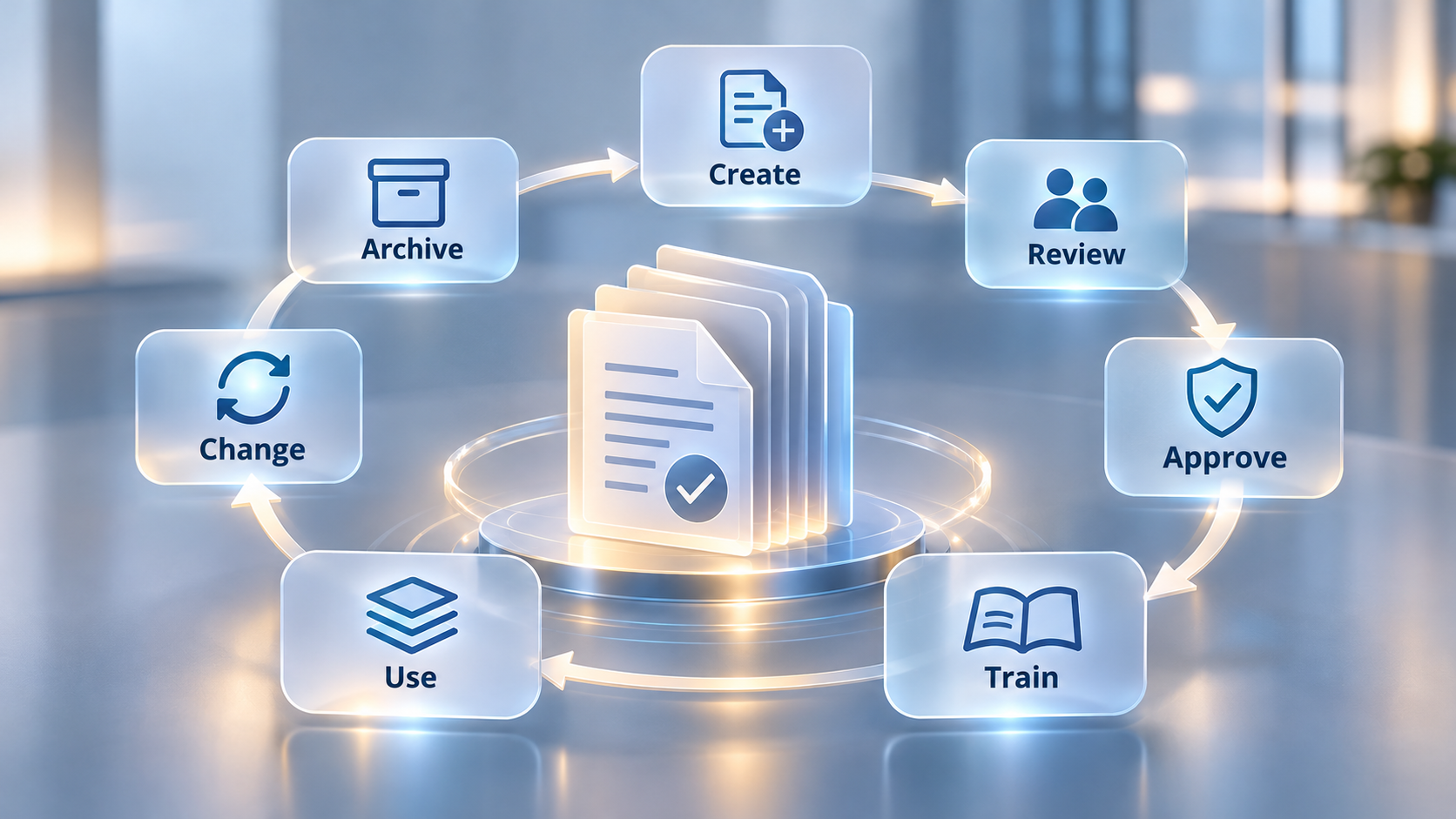
Document the event or observation using an appropriate controlled structure.
Review completeness, accuracy and any required contextual evidence.
Complete review and authorisation according to role and procedural requirements.
Connect related records to changes, deviations, CAPA or audits when applicable.
Make the record and its history available for follow-up, trend review and inspection readiness.
The same principles apply across a broad range of quality and operational documentation needs.
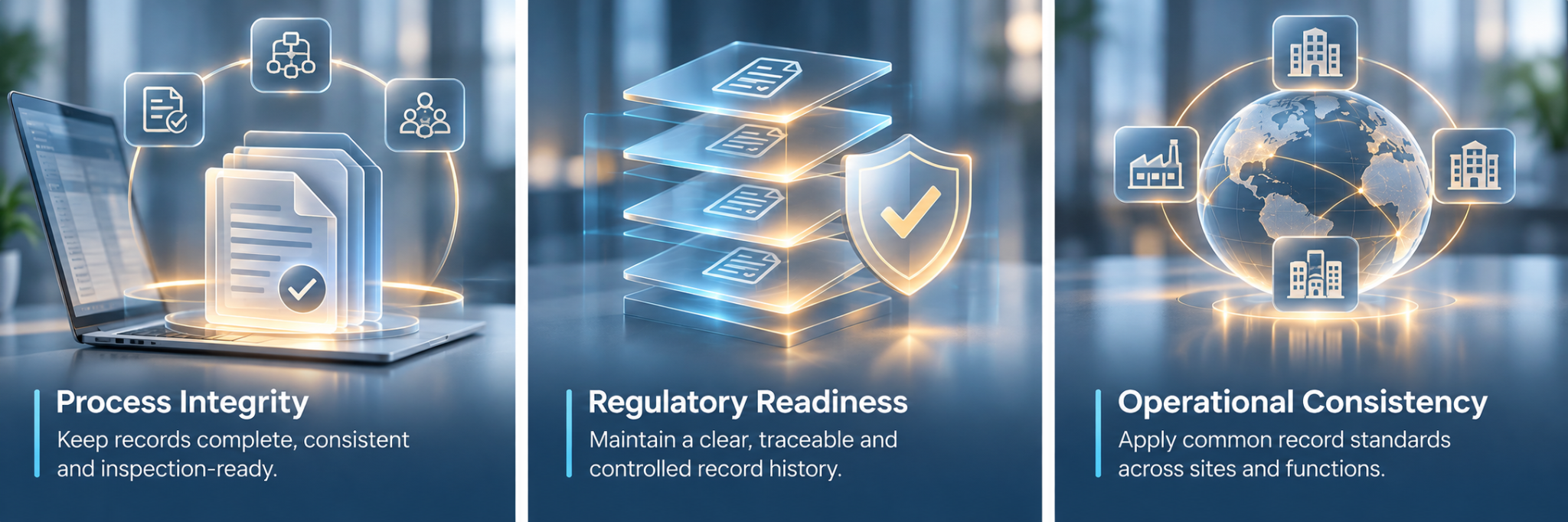
Maintain clearer records of recurring activities and observations when an appropriate logbook capability is implemented.
Keep decisions, assignments, evidence and closure activities connected.
Work with approved information and traceable competence or acknowledgement records.
Retrieve the records and actions needed to support investigation and follow-up.
Structured digital records can reduce avoidable manual handoffs and improve the ability to review work across functions.
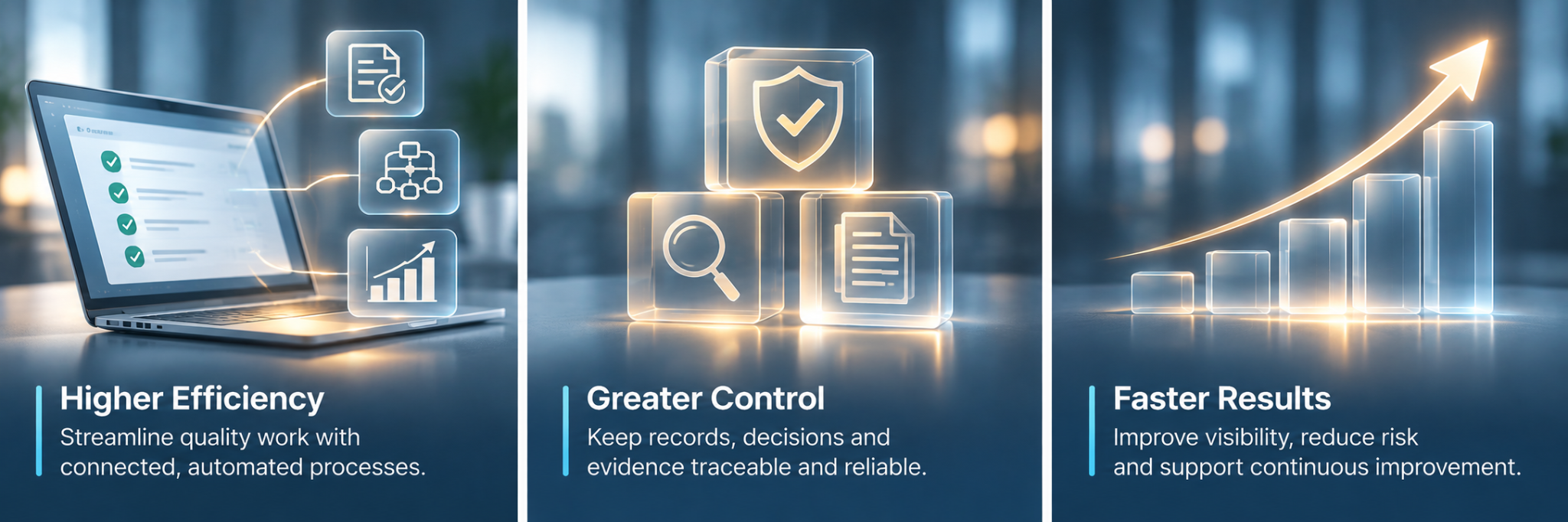
Standardised capture reduces ambiguity and can help prevent omissions.
Roles, statuses and approvals make follow-up responsibilities easier to understand.
Linked documentation makes internal reviews and inspection preparation more manageable.
A connected record model supports the identification of outstanding work and recurring concerns.
Security and traceability are cross-cutting requirements. Explore the related processes and implementation services.
Controlled documents, training, change, quality issues and CAPA.
Audits, findings, qualification and follow-up.
Qualification planning for the configured solution and intended use.
Learn how the modular environment connects quality records and governance.
Discuss where documentation, review or traceability creates the greatest friction in your quality processes.
Electronic manufacturing logbook functionality is discussed here as a documentation use case, not as a confirmed standalone K2C product. Applicable functionality, electronic signature controls and compliance obligations require solution-specific assessment.